
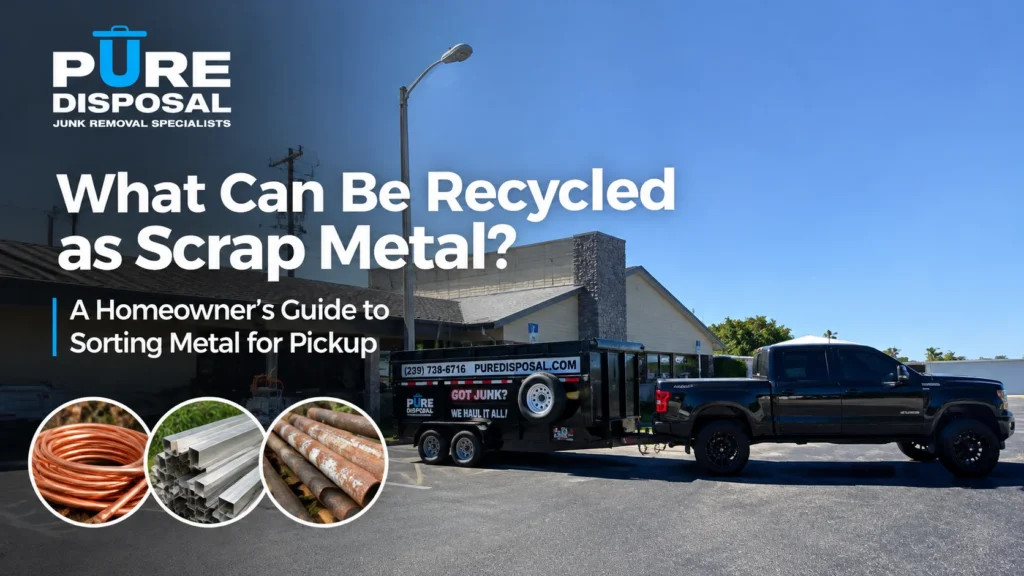
Almost every piece of metal in your home can be recycled as scrap. Steel, cast iron, aluminum, copper, brass, and stainless steel all qualify, whether they show up as a dead washing machine, a stretch of old plumbing, a rusted patio chair, or a bent gutter. The short list of exceptions has less to do with what an item is made of and more to do with what’s inside it: anything still holding refrigerant, fuel, pressure, or a battery needs to be handled separately.
That answers the big question. The more useful part is learning to tell the metals apart and sort them, because a well-organized pile is quicker to load, easier to price, and much less likely to hide something dangerous.
At Pure Disposal LLC, the metal piles we haul away from Cape Coral homes tend to start in a few familiar places: a kitchen remodel that pulled out the range and the old copper lines, a lanai makeover, a pool cage replacement, or a garage that hasn’t been fully cleared since the last hurricane. Whatever started yours, the steps below will help you work out what you have, what belongs together, and what needs to come out of the pile before anyone lifts it. All you need is a refrigerator magnet, a pair of work gloves, and about an hour.
The Magnet Test: Your First Sort
Take a magnet off the fridge and touch it to each piece of metal. That one test splits nearly everything into two groups.
When the magnet sticks, the metal is ferrous, meaning it contains iron. Plain steel, cast iron, and wrought iron behave this way. They’re heavy, they’re everywhere in a house, and they rust when they sit in damp air.
When the magnet doesn’t stick, the metal is non-ferrous: aluminum, copper, brass, or most stainless steel. These metals resist rust, many of them are lighter, and they’re generally worth more per pound because they’re harder to produce from raw ore.
The split matters because the two groups are handled and processed separately once they leave your property. It also keeps small, valuable pieces like a coil of copper tubing from disappearing under a washing machine.
A few things can throw the test off. Aluminum patio furniture is often assembled with steel screws, so touch the magnet to the frame itself, not a bolt head. Paint and powder coating don’t affect the result; a painted steel railing still pulls the magnet. And items built from several metals, like ceiling fans, pool pumps, and power tools, will grab the magnet in one spot and ignore it in another. That’s normal and just means the item goes in a mixed group.
How to Tell the Common Metals Apart
Once you’ve split the pile, the next step is putting a name to each piece. Here’s what to look for.
Steel and cast iron
Steel is the workhorse of household metal. It’s magnetic, heavy for its size, and it turns orange-brown when it rusts. Cast iron is heavier and more brittle, with a rough, grainy surface you’ll recognize from old skillets and bathtubs.
By weight, steel is usually most of a household scrap pile, because it’s the main material in appliances: washer and dryer cabinets, range bodies, dishwasher frames, and water heater tanks. It also shows up in bed frames, exercise machines, filing cabinets, tool chests, shelving, chain-link fence, rebar from a broken slab, and older cast iron drain pipe. Rust doesn’t disqualify any of it. Galvanized steel, the dull gray, zinc-coated metal used on fence posts, trailers, and some dock hardware, counts as well.
Aluminum
Aluminum is light, silvery gray, and ignores the magnet completely. Instead of rusting red, it weathers to a dull, chalky white. If you’ve ever picked up a section of pool cage framing and been surprised by how little it weighs, that was aluminum.
Cape Coral homes have a lot of it, mostly outdoors: screen enclosure framing, screen doors, most residential gutters and downspouts, many storm shutters, patio furniture, boat lift parts, and window frames. Screen enclosures and shutters usually come with other materials attached, such as fiberglass screen mesh held in by rubber spline or clear plastic shutter panels. Pull those out if they come away easily; if they don’t, leave them.
When a piece looks silver and the magnet won’t stick, it could be aluminum or stainless steel. Pick it up. Aluminum feels noticeably lighter for its size, has a duller finish, and scratches easily with a key. Stainless is heavier, shinier, and much harder to mark.
Copper
Copper is reddish brown when it’s clean, darkens to brown as it ages, and turns green where it’s been exposed to weather. It’s non-magnetic, fairly heavy, and the most valuable metal most homeowners ever handle.
It turns up in water supply lines removed during a repipe or repair, in the insulated line set that connects an outdoor A/C condenser to the indoor air handler, inside electrical cords and cable, and in the motor windings of old appliances, pool pumps, and fans.
Scrapyards grade copper by how clean it is. Bare, shiny wire with no coating is the top grade, usually called bare bright. Clean pipe and tubing with no solder, paint, or fittings is generally called #1 copper. Copper with solder joints, paint, corrosion, or brass fittings still attached usually falls into #2. You don’t need to sort that finely for a pickup, but if you plan to sell a box of copper yourself, cutting off fittings and soldered ends can move it into a better grade.
One safety point: copper line sets should only be cut out of an air conditioning system after an HVAC technician has recovered the refrigerant.
Brass
Brass is yellow to gold, heavy, and non-magnetic. Faucets, shutoff valves, hose bibs, plumbing fittings, doorknobs, hinges, lock sets, lamp parts, and boat fittings are often brass.
Many kitchen and bathroom fixtures are chrome-plated, so they look silver even though there’s brass underneath. A small scratch in a hidden spot tells you which you have. Yellow under the chrome means brass. Gray usually means zinc die-cast, often called pot metal, which is lighter and worth less.
Stainless steel
Stainless is bright, shiny, and resists rust, which is why it’s so common on docks, boats, grills, and kitchen sinks around Cape Coral. Most household stainless doesn’t attract a magnet, but some cheaper grades used in budget appliances and tools pull weakly, so identify it by its look, weight, and use rather than relying on the magnet alone.
Wire, cable, and mixed-metal items
Extension cords, appliance cords, leftover electrical cable, and coaxial cable all have copper or aluminum inside the insulation. Bundle wire separately from everything else. Stripping it is optional, and burning insulation off is both toxic and prohibited in many places.
Items made from several metals plus plastic, such as ceiling fans, motors, pool pumps, small appliances, and power tools with the battery removed, are still scrap metal. They’re simply sorted as mixed material, so give them their own spot in the pile.
Quick Reference for Common Household Items
| Item | Main metal | Magnet sticks? | Before it goes |
|---|---|---|---|
| Washer or dryer | Steel | Yes | Disconnect water and power; a gas dryer needs the gas shut off and capped |
| Water heater | Steel tank | Yes | Shut off power or gas, drain completely, disconnect lines |
| Refrigerator or freezer | Steel, copper | Yes | Empty and defrost; refrigerant must be recovered |
| A/C condenser or window unit | Steel, copper, aluminum | Partly | Refrigerant must be recovered |
| Pool cage or screen framing | Aluminum | No | Pull screen mesh if it comes out easily |
| Gutters and downspouts | Aluminum (usually) | No | Nothing required |
| Patio chairs and tables | Aluminum, steel, or wrought iron | Varies | Remove cushions and glass tops |
| Gas grill | Steel or stainless | Varies | Remove the propane tank; empty the grease tray |
| Faucets and valves | Brass | No | Nothing required |
| Copper water line | Copper | No | Cut off plastic or PEX sections if it’s quick |
| Lawn mower | Steel or aluminum deck | Varies | Drain gas and oil |
| Cast iron tub | Cast iron | Yes | Very heavy; never move one alone |
| Filing cabinet or shelving | Steel | Yes | Empty drawers and shelves |
Metal Items That Need Special Handling
A handful of items contain plenty of metal but can’t go into an ordinary scrap load as they are. The reasons are safety and regulation, not pickiness.
Appliances with refrigerant: Refrigerators, freezers, wine coolers, dehumidifiers, window A/C units, central A/C condensers, and heat-pump pool heaters all contain refrigerant, and federal rules require it to be recovered by a certified technician before the metal is processed. That’s why refrigerator disposal follows a separate path from a pile of gutters or patio chairs. If you’re having Pure Disposal LLC pick up your pile, just mention any of these units when you call so they’re routed correctly.
Propane tanks and pressurized cylinders: Grill tanks, camping canisters, fire extinguishers, scuba tanks, and welding cylinders can hold pressure or residue even when they feel empty. Never cut, drill, or crush one. Propane exchange locations typically accept grill tanks, and fire equipment service companies can usually take extinguishers.
Batteries: Lithium-ion packs from tools, laptops, and e-bikes can catch fire if crushed. Lead-acid batteries from cars, boats, and golf carts contain lead and acid. Pull every battery before tools and toys go in the pile; many auto parts stores accept lead-acid batteries.
Electronics: Televisions, monitors, computers, and printers contain circuit boards, and older tube-style screens contain leaded glass, so they belong with electronics disposal rather than general scrap.
Anything holding fuel, oil, paint, or chemicals: Drain mowers, pressure washers, and generators before adding them to the pile, and take gas, oil, paint, and pool chemicals to Lee County’s household hazardous waste drop-off.
Anything that isn’t yours: Leased equipment, such as some rented water heaters or water treatment systems, along with utility hardware and anything marked as company property, can’t go in a scrap load even if the metal itself is recyclable.
Sorting the Pile in About an Hour
You don’t need a scrapyard’s level of detail. Four groups cover almost every household pile:
- Magnetic metal, such as appliances, shelving, bed frames, tools, cast iron, and fencing. This is usually the biggest and heaviest group.
- Non-magnetic metal, such as aluminum framing, gutters, and patio furniture, with copper and brass kept in a bucket of their own since they’re small and easy to lose.
- Wire and cable, coiled or bundled together.
- Set-asides, meaning anything from the special-handling list above.
You may hear scrap described as clean or dirty. Clean scrap is just metal. Dirty scrap has other materials attached, like plastic housings, rubber feet, wooden handles, foam cushions, or glass. Dirty scrap is perfectly fine to include. If something separates easily, such as a cushion lifting off or a glass top sliding out, go ahead and remove it. If it would take cutting or prying, leave it alone.
Once everything is grouped, take a wide photo of the whole pile and a close-up of the largest items. If you’re planning a pickup, those photos are usually all Pure Disposal LLC needs to give you an accurate price before anyone drives out.
Wear sturdy gloves and closed-toe shoes the entire time. Cut appliance sheet metal, sharp aluminum framing, and torn gutter sections can slice through bare skin, and rusted pieces are often sharper than they look.
Getting the Heavy Items Ready
The biggest pieces in a metal pile need a little preparation before they can go anywhere. Here’s what to do for the ones that come up most often.
Water heater: Turn off the power at the breaker for an electric unit, or turn the gas valve to off for a gas unit. Close the cold water supply valve and let the tank cool for a few hours, since the water inside stays hot long after the heat is off. Attach a garden hose to the drain valve near the bottom, run it somewhere the water can go safely, open a hot water faucet inside the house to let air in, and open the drain. Hardwired electrical and gas connections should be disconnected by someone qualified. If you’re replacing the heater, the installer will usually disconnect and drain the old one for you.
Refrigerator or freezer: Unplug it a day ahead and leave the doors open so the freezer defrosts and doesn’t leak on the way out. Empty all food, shut off and disconnect any ice maker water line, and tape the doors closed so they can’t swing open while the unit is being carried.
Washer and dryer: Shut off the water valves behind the washer, disconnect the hoses, and drain the leftover water into a bucket. Unplug the dryer. A gas dryer needs its gas line shut off and capped by someone qualified.
Gas grill: Remove the propane tank and keep it out of the pile. Empty the grease tray so it doesn’t spill during loading.
Lawn equipment: Run the mower or trimmer until the gas is gone, or drain it into an approved container, and drain the oil if the engine has a separate reservoir.
Long aluminum pieces: Gutters, pool cage sections, and screen framing are easier to load when cut to manageable lengths. Never cut anything that’s still attached overhead or under tension, and leave structural pool cage removal to a qualified contractor.
You don’t have to drag any of these to the curb. As long as the item is disconnected, drained, and accessible, our crew can carry it out of the garage, laundry room, utility closet, or lanai.
What’s Different About a Cape Coral Metal Pile
A few local conditions shape what ends up in the garage here.
Salt air speeds up corrosion, especially for homes along the canals and near the river. Outdoor steel rusts faster than it would inland, which doesn’t change whether it counts as scrap but does leave pieces weaker and sharper than they appear.
Storm cleanup produces mixed piles. After a hurricane, metal usually comes down tangled with wet drywall, soffit, roofing, wood, and vegetation. When it’s safe, pull the metal into its own pile, and photograph all the damage for your insurance claim before anything gets hauled away.
Pool equipment adds up quickly. Pool pumps contain copper windings, gas pool heaters contain copper heat exchangers, and heat-pump pool heaters contain refrigerant and need the same handling as an air conditioner. A full screen enclosure replacement can produce a surprising amount of aluminum.
Docks and boat lifts bring their own hardware, too. Lift motors, cables, cleats, ladders, and railings are usually stainless or galvanized steel, with motors counting as mixed metal.
Selling It Yourself or Having It Hauled Away
If what you have is a box of clean copper and a few brass valves, it may make sense to sort it carefully and drive it to a scrapyard yourself. Small amounts of high-grade metal fit in a trunk and are worth the trip.
A full appliance set, a water heater, a dismantled screen enclosure, a lanai’s worth of patio furniture, or a storm debris pile is another matter. Those loads need a trailer, two people, and a plan for the items that need special handling. Many homeowners first check whether the city will collect them, so it’s worth understanding how Cape Coral bulk pickup compares with hiring a private hauler before you drag a refrigerator to the curb and wait.
The same sorting applies when metal comes out of a remodel. Kitchen and bathroom projects tend to produce a lot of copper and brass along with the old appliances, and scrap metal from home renovations often includes pieces homeowners never think to set aside.
For the bigger jobs, Pure Disposal LLC offers scrap metal pickup throughout Cape Coral, from single appliances to full garage and storm cleanups. Jobs are priced by how much of the trailer the load fills, and our flat trailer-load rates are posted so you know what to expect before you call.
Frequently Asked Questions
Is rusty metal still considered scrap?
Yes. Rust is iron oxide on the surface of steel, and it doesn’t change whether the metal can be reclaimed. A rusted-through grill, a corroded fence post, or a patio set that’s spent years in Cape Coral humidity still counts as ferrous scrap. Heavy rust can make edges sharper and pieces weaker than they look, so wear gloves and handle badly corroded items with care.
How can I tell aluminum from stainless steel?
Neither one attracts a magnet in most cases, so use weight and finish instead. Aluminum is much lighter for its size, has a dull, slightly chalky surface, and scratches easily with a key or screwdriver. Stainless steel is heavier, has a brighter and harder finish, and resists scratching. Location helps too: screen framing and gutters are usually aluminum, while sinks, grill grates, and dock cleats are usually stainless.
Do I need to strip the insulation off copper wire?
No. Stripping is optional and slow if you have more than a few feet. Bare copper does bring a better price at a scrapyard than insulated wire, which is why some people bother, but for a pickup it’s fine to bundle cords and cable together as they are. Never burn insulation off wire. It releases toxic smoke and is illegal in many areas.
Can an old water heater be scrapped?
Yes. Water heater tanks are mostly steel and one of the most common heavy items in a household metal pile. Before it goes, the power or gas must be shut off, the water and fuel lines disconnected, and the tank fully drained. A tank that still holds water can weigh several hundred pounds. Let it cool for a few hours first, since the water inside stays hot long after shutoff.
Are pool pumps and pool heaters scrap metal?
Yes, with one exception. Pool pumps contain copper motor windings and steel parts, and gas pool heaters have copper heat exchangers, so both are useful scrap. Heat-pump pool heaters, however, work much like an air conditioner and contain refrigerant, which has to be recovered by a technician before the unit can be processed. Mention any heat pump when you schedule a pickup so it’s handled properly.
Can scrap metal go in my regular recycling cart?
Generally not. Curbside recycling carts are designed for food and beverage containers, not pipes, appliances, framing, or tools, and bulky metal can jam or damage collection equipment. Larger metal items usually need a bulk collection appointment, a trip to a scrapyard, or a private pickup. Your city’s collection service can confirm its current rules for metal and appliances.
Clear the Pile Without the Heavy Lifting
Sorting is the part that takes a little thought. Hauling is the part that takes a strong back and a trailer. If your metal pile is more than you want to load yourself, call Pure Disposal LLC at (239) 738-6716, or send us the details and a few photos through our quick quote request. We’ll let you know what we can take, what needs special handling, and what the job will cost before the crew arrives.